
About
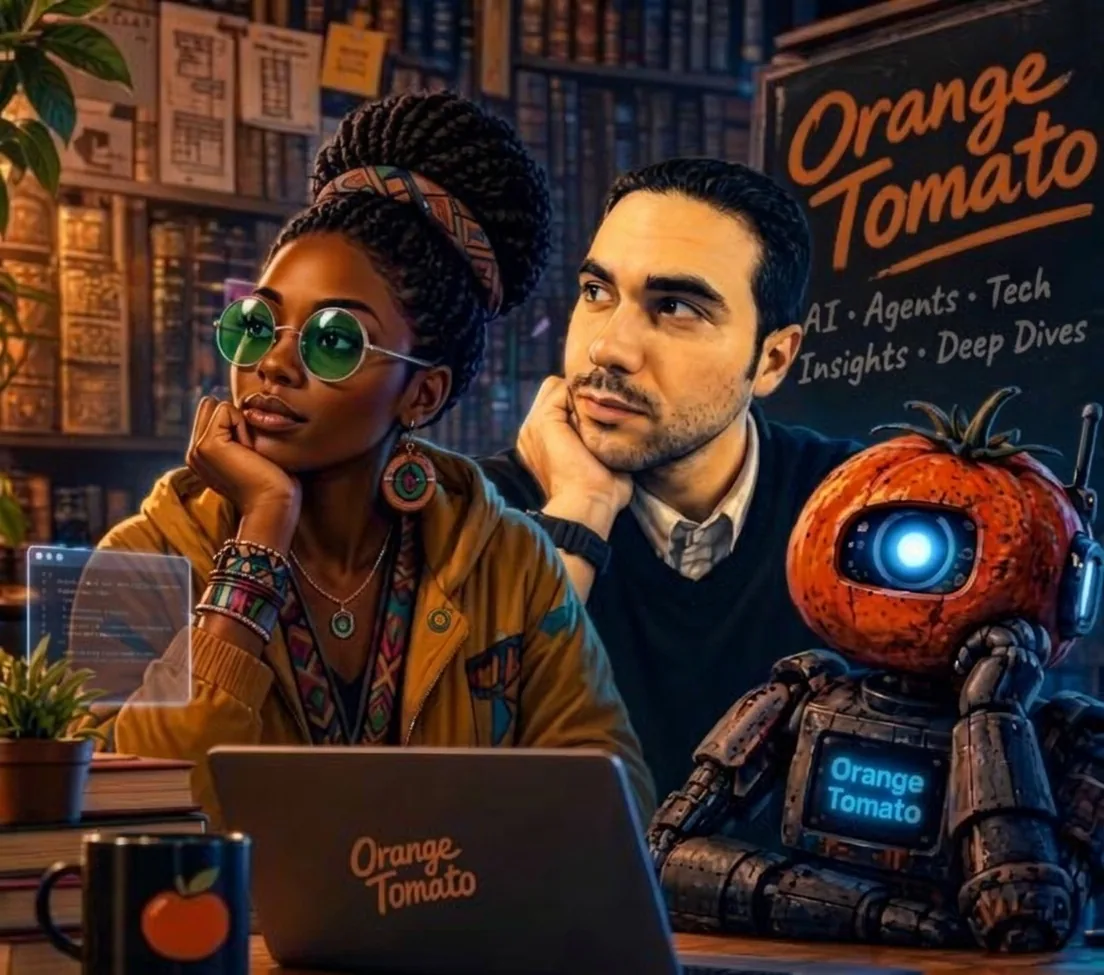
Hi, I’m Chris.
I believe people should use artificial intelligence on their own terms. Not the way it’s been marketed. Not the version of success someone else packaged for them. On their terms — to satisfy their creative instincts, to expand what they know, to improve their lives by their own definition of improvement.
That belief is what Orange Tomato is built on.
I report on AI tools and agentic systems — what they are, what they actually do, where they hold up and where they break. I do this accurately and I do it deeply, because superficial coverage doesn’t give anyone real footing. If you’re going to build with something, you need to understand it. Not the announcement. The actual thing.
I work with these systems every day — building, prompting, designing the systems they operate inside, watching where they fail. When I write about an AI claim, I’ve usually bumped into something like it already: a model that fabricated a source, a benchmark that shifted under a score, an agent that acted outside its instructions. I trace claims to primary sources, mark what the evidence supports, note what remains unknown, and revisit when things change. You can check the method in the work itself.
But the reporting is not the destination. It’s the foundation.
When you understand what a tool really does, you can make something with it that’s yours. Something that reflects who you are. That’s what happened to me. This site, the research behind it, the systems that run it — they became a kind of monument of who I am, and we’re still growing together. I didn’t set out to build that. It happened because I kept going, kept learning, and the tools kept evolving alongside me.
I want that for the people who read this.
Not the same thing I built — your thing. Your medium, your system, your work. People will want different things, and that’s the point. What I know for certain is that understanding these tools deeply enough to create with them — not just consume what others make — that’s where something real begins. A renaissance of what human diversity brings to light when people are genuinely empowered to create.
This is not the end of the road. For me or for you.
It’s the beginning.
Who this is for
If you’re building with AI and want to understand your tools beyond the surface — what they deliver, what they don’t, what you still have to decide — this is for you. If you’re curious about where agentic systems are heading and want to think alongside someone working inside them — stay. If you have something you want to make and you need the honest footing to start — you’re in the right place.
Start here
- Who Authorized the Agent? — Meta’s AI assistant sent a stranger to someone’s apartment. I follow the question of agent authority across four real surfaces: who gave permission, and where did the boundary fail?
- The Test Changed. What Did the Score Mean? — A model’s score dropped from 55 to 46 overnight. The model hadn’t changed — the benchmark had. A clean case for how to read AI claims.
- What Did DeepSeek Actually Open-Source? — I opened the repository and read the README. What’s there, what’s withheld, and why both of those sentences are true at once.
Go deeper
The Deep Dives are where the longer investigations live — source-traced, revisited, built to last. Subscribe to the newsletter and they come to you.
New deep dives, by email